
What is EV Battery Swapping?
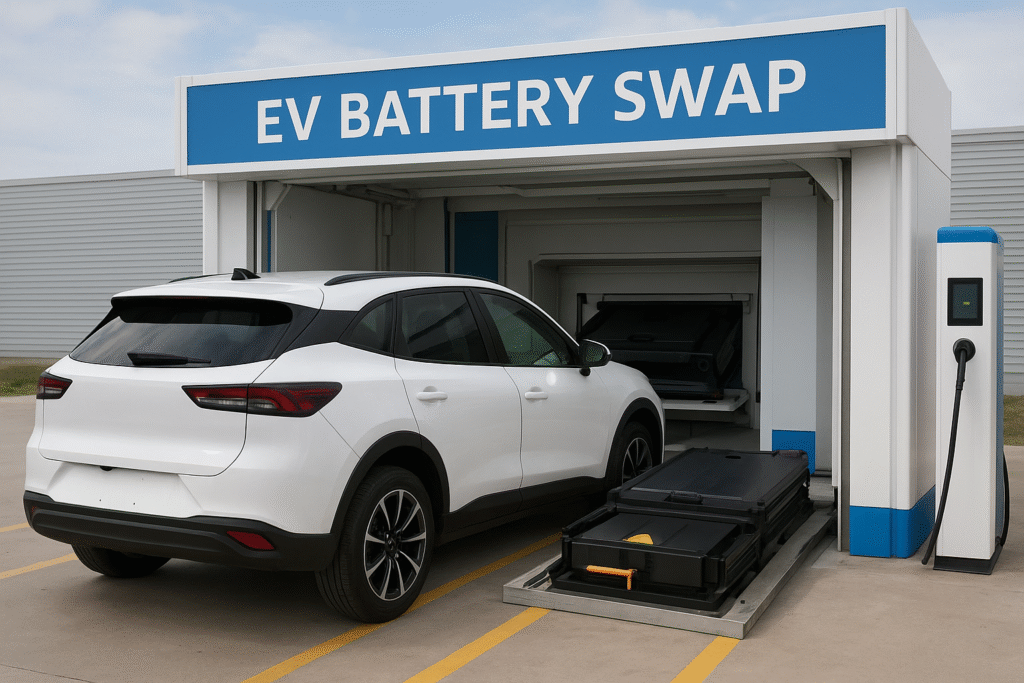
Battery swapping is a method where EV owners can replace a discharged battery with a fully charged one at a swapping station. Instead of waiting hours to recharge, users can swap batteries in just a few minutes.
✅ How It Works:
- You drive into a battery swapping station.
- A discharged battery is removed.
- A fully charged battery is installed.
- The entire process takes less than 5 minutes.
🔹 Benefits of EV Battery Swapping
- ⏱ Time-Saving: Much faster than traditional charging (just like refueling a petrol car).
- 💰 Lower Upfront Cost: Consumers can buy EVs without batteries (reducing cost by 30–40%) and subscribe to battery-as-a-service.
- 🚗 Extended Vehicle Life: Professionally maintained batteries improve performance and safety.
- 🌍 Sustainability: Batteries are recycled and reused efficiently by service providers.
- 🛵 Best for Fleets: Ideal for electric rickshaws, delivery bikes, and taxis that need quick turnaround times.
🔹 What is Fast-Charging Technology?
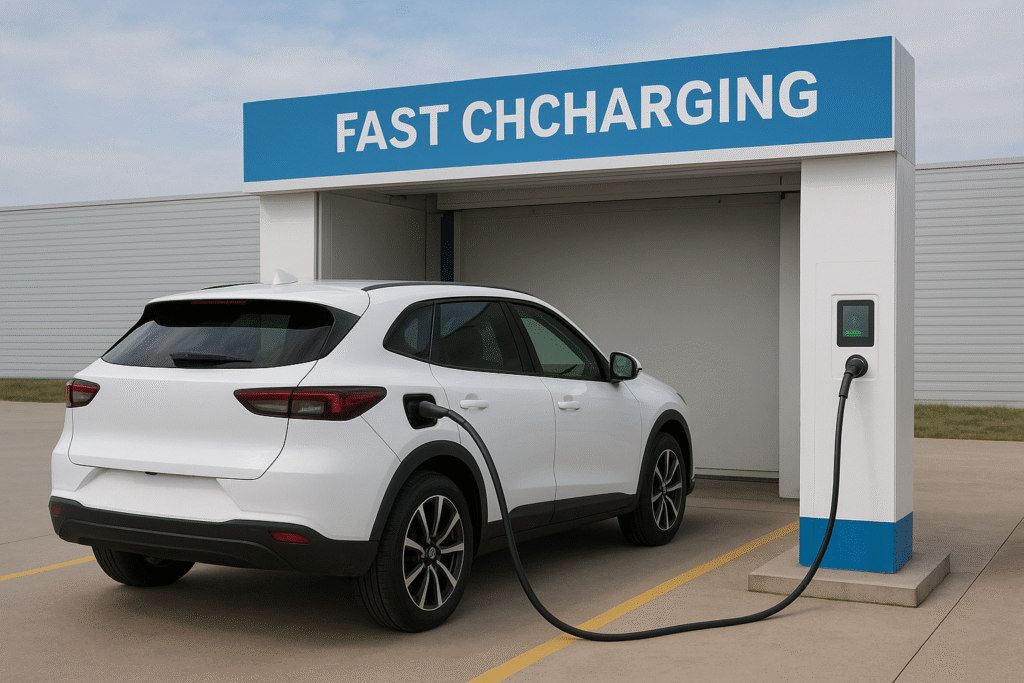
Fast-charging technology allows EV batteries to be charged up to 80% within 30–60 minutes using high-power DC chargers. With advancements in charging networks and 350 kW+ ultra-fast chargers, recharging times are shrinking rapidly.
✅ Types of EV Chargers:
- AC Chargers (Slow): Home or workplace charging, 6–8 hours.
- DC Fast Chargers: Public charging stations, 30–60 minutes for 80% charge.
- Ultra-Fast Chargers: Next-gen chargers (350–500 kW), as low as 15–20 minutes.
🔹 Battery Swapping vs Fast Charging
| Feature | Battery Swapping 🚀 | Fast Charging ⚡ |
|---|---|---|
| Time Taken | 3–5 minutes | 30–60 minutes |
| Best For | Fleets, two-wheelers, taxis | Private cars, long-distance travel |
| Upfront EV Cost | Lower (battery subscription model) | Higher (battery included) |
| Infrastructure Cost | High (requires many spare batteries) | Moderate (charging stations) |
| Battery Ownership | Service provider owns batteries | User owns the battery |
🔹 EV Battery Innovations in India
- NITI Aayog’s Battery Swapping Policy (2022): Aimed at promoting interoperability and standardization for 2-wheelers and 3-wheelers.
- Tata Power, Ola Electric, Sun Mobility: Expanding EV charging & swapping networks across India.
- Solid-State Batteries: Upcoming technology that will reduce charging times and improve energy density.
🔹 Final Thoughts
Both battery swapping and fast-charging technology will play a crucial role in building India’s EV ecosystem. While swapping is more suited for fleets, bikes, and rickshaws, fast charging will dominate private cars and long-distance travel.